
As water security continues to challenge communities across the Philippines, SM City Baguio is showing how innovation and sustainability can flow together. Through its rainwater treatment facility, the mall treats rainwater to convert into potable water, helping secure tomorrow’s water supply for its operations.
Baguio City experiences frequent rainfall but limited water resources. Water supply from the Baguio Water District is rationed, with some neighborhoods receiving water only twice a week, which they use to fill up their water tanks. When this runs out, residents depend on deliveries from private water companies.
This initiative reduces reliance on local water utilities while ensuring the mall can continue serving millions of visitors responsibly. More importantly, it demonstrates how rainwater, when managed smartly, can be harnessed to address urban water scarcity.
“We’ve always valued innovation and creativity in the malls – we take it a step further now to where it truly matters. SM City Baguio’s rainwater treatment facility shows how the right innovation can secure tomorrow’s water,” said SM Supermalls President Steven Tan.SM City Baguio’s pioneering system captures, treats, and stores rainwater to potable standards, producing up to 150 cubic meters of safe drinking water per day, with the capacity to double production to 300 cubic meters daily.
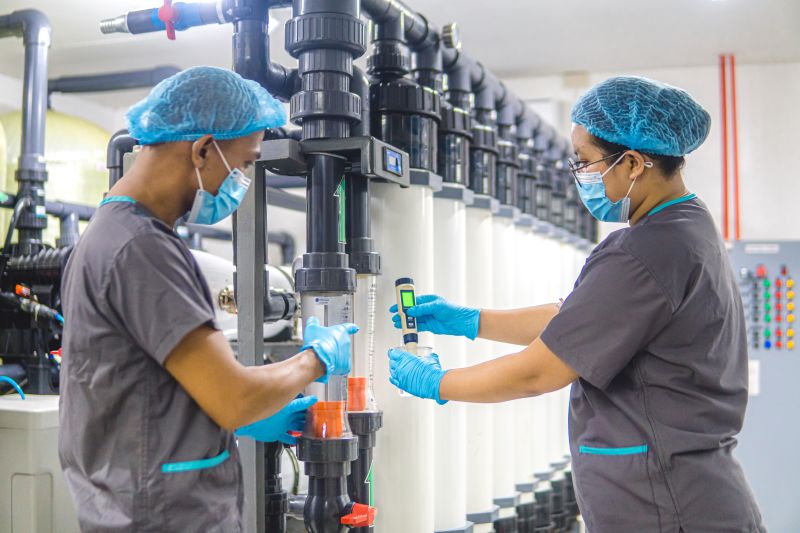
Through advanced filtration and treatment systems, SM City Baguio converts collected rainwater into potable-grade water, setting a new benchmark for sustainability in commercial developments
Championing Water for Tomorrow
SM Prime’s Water for Tomorrow campaign advocates efficiency, innovation, resilience, and awareness in water resilience, and promotes the wider sustainability campaign of the SM Green Movement. Beyond Baguio, SM Prime’s water initiatives span the installation of advanced treatment facilities, recycling systems, and community engagement programs.
In 2024, SM Prime recorded a 26.23% increase in recycled water volume, rising from 4.42 million cubic meters in 2023 to 5.59 million cubic meters. The SM Green Movement’s Water for Tomorrow campaign continues to demonstrate how everyday innovation can ensure a sustainable tomorrow—for businesses, communities, and the planet.

Mrs.Enero – Angel Enero is a former IT System Administrator and now a full-time SAHM to her #littleEneros. She’s a domesticated / hands-on mom who loves baking and gardening.
MRSENERODIARIES blog is an online diary of Angel Enero. Formerly a travel blogger and now a lifestyle mommy blogger. Blogging about EAT. PRAY. LOVE. TRAVEL.